

Disclaimer:
This article is intended for general informational purposes only and does not guarantee outcomes for any specific transaction or customs determination. For actual import procedures, please confirm the latest laws, regulations, and instructions issued by customs and quarantine authorities.
High-Risk Food Products and Practical Compliance Checkpoints
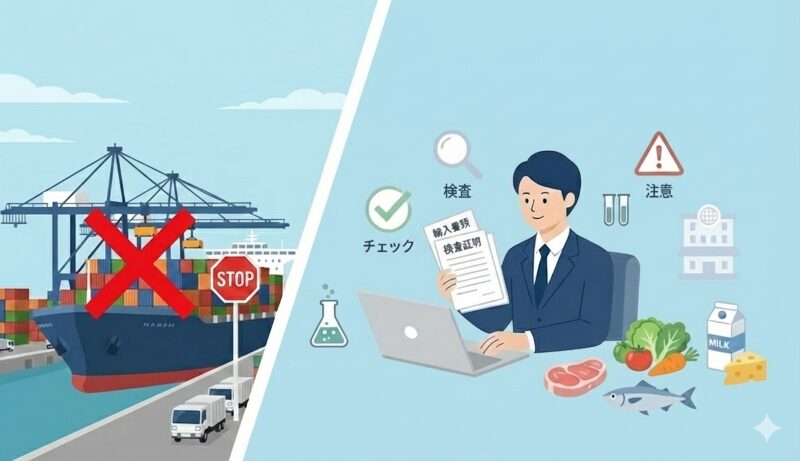
“After filing the import declaration, our shipment was suddenly stopped for a mandatory inspection…”
Food import clearance is completed only after customs clearance, quarantine, and food safety reviews. Among these steps, mandatory inspection is one of the most common reasons shipments are delayed or held at the border.
Typical issues include:
- A mandatory inspection imposed even though the documents appeared complete
- Extended clearance time despite urgent delivery schedules
- Unexpected inspection and laboratory testing costs
In most cases, these problems are caused by insufficient pre-import compliance checks.
This article explains, from a practical perspective:
- Common scenarios that trigger mandatory inspections
- Key checkpoints for day-to-day import operations
- How to avoid or minimize the impact of mandatory inspections
- What Is a Mandatory Inspection and How Does It Affect Customs Clearance?
- Common Scenarios That Trigger Mandatory Inspections
- Practical Compliance Checkpoints for Import Operations
- Practical Checklist to Reduce the Risk of Mandatory Inspection
- Conclusion: Mandatory Inspection Is Not a Dead End, but a Warning Signal
- References
What Is a Mandatory Inspection and How Does It Affect Customs Clearance?
A mandatory inspection is an official food safety inspection ordered by authorities to confirm that imported food complies with domestic safety standards.
In Japan, this system is enforced under the Food Sanitation Act by the Ministry of Health, Labour and Welfare and quarantine stations. For global readers, it is comparable to government-mandated food safety inspections conducted separately from customs duty assessment.
Once a shipment is designated for mandatory inspection, customs clearance is suspended until the inspection is completed and compliance is confirmed.
This risk-based approach is consistent with international food control principles promoted by the Codex Alimentarius Commission (FAO/WHO):
https://www.fao.org/fao-who-codexalimentarius/en/
Common Scenarios That Trigger Mandatory Inspections
(1) Foods with Higher Health Risks
The following food categories are frequently subject to mandatory inspection due to elevated microbiological risk:
Fresh and Perishable Foods
- Fresh meat (beef, pork, poultry)
- Seafood (including raw consumption products and processed items)
- Vegetables and fruits, especially those consumed raw
These foods are internationally recognized as high-risk for pathogens such as Salmonella and Listeria, as outlined by the World Health Organization (WHO):
https://www.who.int/teams/nutrition-and-food-safety/food-safety
Dairy Products
- Raw milk, cheese, butter, and other dairy items
- Unheated or low-temperature pasteurized products often require physical testing rather than document-only review.
Eggs and Egg-Based Products
- Products containing only egg yolk or egg white
- Processed egg products
Reason: High risk of microbial contamination when consumed raw or insufficiently heated.
For a full English version of Japan’s food safety law, refer to the official Food Sanitation Act translation at the Japanese Law Translation website:https://www.japaneselawtranslation.go.jp/en/laws/view/5024. This outlines basic safety, labeling, additive controls, and inspection provisions that apply to imported food.
(2) Products with a History of Non-Compliance
Foods with Prior Food Safety Violations
- Pesticide residue levels exceeding limits
- Unauthorized or excessive use of food additives
- Labeling and allergen declaration violations
Products with previous violations are classified as higher risk under international customs risk management frameworks, such as those promoted by the World Customs Organization (WCO):
https://www.wcoomd.org/en/topics/facilitation/instrument-and-tools/risk-management.aspx
Products from Exporting Countries or Manufacturers with Limited Compliance Records
If an exporter, manufacturer, or processing facility lacks a reliable compliance history, authorities may require inspection even when documents such as commercial invoices, packing lists, HS codes, or COO (Certificate of Origin) are complete.
(3) Foods Involving Regulated Ingredients or Substances
Restricted or Unapproved Food Additives
Additives permitted in the exporting country may be restricted or prohibited in the importing market. Regulatory differences are a common trigger for mandatory inspection, especially in FOB or CIF transactions where formulation details are insufficiently disclosed.
Foods Potentially Containing Major Allergens
- Eggs
- Milk
- Wheat
- Peanuts, etc.
Allergen labeling and control are subject to strict international standards, including Codex guidelines on food labeling:
https://www.fao.org/fao-who-codexalimentarius/codex-texts/guidelines/en/
(4) Products of Animal or Plant Origin
Animal-Based Processed Foods
- Ham, sausages, pâtés, and similar products
Even fully cooked or processed items may be subject to veterinary checks in accordance with international animal health standards issued by the World Organisation for Animal Health (WOAH):
https://www.woah.org/en/what-we-do/animal-health-and-welfare/
Plant-Based Raw Materials
- Seaweed, dried mushrooms, and similar products
These products may fall under plant quarantine measures designed to prevent the spread of pests and diseases, consistent with the International Plant Protection Convention (IPPC):
https://www.ippc.int/en/
Practical Compliance Checkpoints for Import Operations
Always Review the Latest Mandatory Inspection Lists
Mandatory inspection targets are not fixed. Authorities regularly update risk-based inspection lists.
Importers should always review the latest guidance from customs and food safety authorities before shipment, particularly when classifying goods under specific HS codes or changing suppliers.
Understand the Difference Between Sampling Inspection and Full Inspection
Mandatory inspections may involve:
- Sampling inspection
- 100% (full) inspection
Full inspection significantly increases time and cost. Conducting pre-shipment laboratory testing and preparing robust documentation can often limit inspections to sampling level.
Extra Caution for Exporters or Countries with Prior Violations
The compliance history of exporters, manufacturers, and processing facilities is a key factor in inspection decisions.
Submitting the following documents in advance may help reduce inspection risk:
- Manufacturing flow charts
- HACCP certificates aligned with international standards
- Internal or third-party inspection and laboratory reports
More information on HACCP-based food safety systems can be found here:
https://www.fda.gov/food/hazard-analysis-critical-control-point-haccp
Practical Checklist to Reduce the Risk of Mandatory Inspection
Before shipping, confirm the following:
- ☑ Compliance with domestic food labeling and ingredient regulations
- ☑ No past violation records for the product or manufacturer
- ☑ Safety assessment of the exporting country and facility
- ☑ Whether any ingredients fall under quarantine or inspection controls
- ☑ Pre-shipment laboratory testing or advance consultation completed
You may also find the article below helpful.
→Definitive Guide to Food Import Preparation & Ingredient Labeling in Japan
Conclusion: Mandatory Inspection Is Not a Dead End, but a Warning Signal
Mandatory inspection is a common cause of food import delays, but many cases can be avoided through proper preparation and risk management.
Key takeaways for minimizing inspection risk:
- Identify high-risk food categories
- Pay close attention to products or origins with prior violations
- Verify regulated ingredients and allergen requirements
- Review the latest mandatory inspection criteria
- Prepare documentation and test results in advance
Mandatory inspection clearly indicates why a shipment is considered risky.
Addressing those risks before shipment is the fastest and most reliable path to smooth customs clearance—whether trading under FOB or CIF terms, declaring accurate HS codes, or submitting a valid COO.
References
- Codex Alimentarius Commission (FAO/WHO)
International food safety standards and risk-based inspection principles - World Customs Organization (WCO) – Risk Management
International customs risk management frameworks - CODEX – Codex Alimentarius FAO-WHO
- Codex Texts – All Standards including Labelling
- Food Safety – World Health Organization (WHO)